Plumbing for Dallas–Fort Worth homes
Plumbing work done with a steady hand
Kitchens and baths, fixtures, leaks, water heaters, and the quality and pressure of the water itself. We take the time to find what has actually failed, explain it in plain terms, and give you the price before any work begins.
- The cost is settled before the toolbag opens
- Nothing begins until you approve it
- Each repair is tested before we pack up
Services
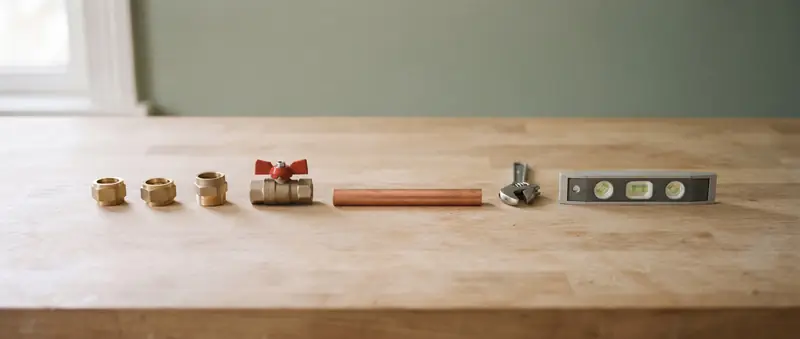
Eight kinds of work, each done properly
From a faucet that drips to a house that needs new water lines. Each page explains how the problem arises, what a sound repair involves and what to expect from a visit.
How we work
Unhurried where it matters
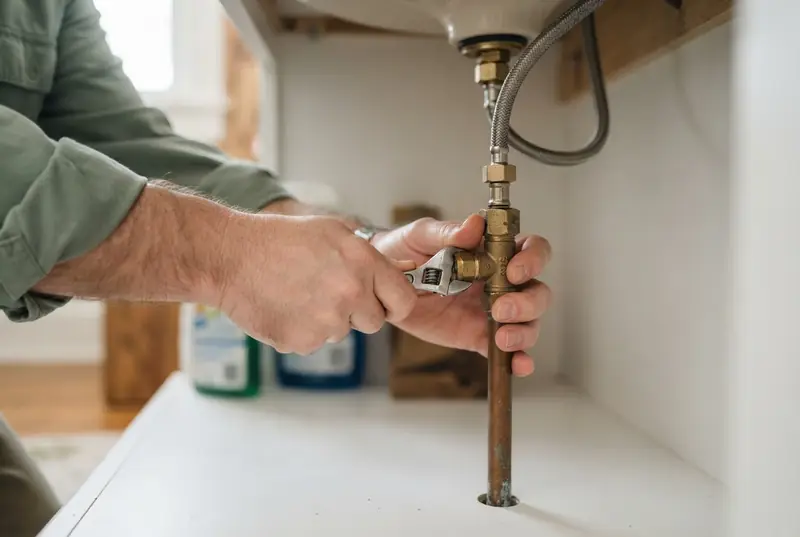
Good plumbing is mostly a matter of attention. The joint that leaks next year is the one that was rushed this year: a fitting not quite square, a seal reused when it should have been replaced, a test skipped because the day ran long.
So we would rather be thorough than quick. The right part instead of the nearest one. Floors and counters covered before a tool comes out. And a pressure test at the end, every time, because that is the only fair way to call a repair finished.
- What failed, and why, explained in plain terms
- A price before any work starts
- Floors and finishes protected while we work
- The repair tested and the area left clean
A visit, step by step
What happens when we come out
We listen first
You know your house better than anyone. What you noticed, and when, usually points to the cause faster than any instrument.
We find the cause
The fault is traced and tested rather than assumed. Then you see for yourself which part gave out, and the reason it did.
You approve the price
You are told the cost first. Not a thing is opened, cut or replaced until you say so.
We repair, test and tidy
The work is done carefully, the repair is tested, and the room is left as clean as we found it.
The water itself
Most wear begins with hardness and pressure
Two things decide how long the faucets, valves, hoses and water heater last in a North Texas home, and neither can be seen. The water here is hard, so minerals settle in tanks and grind away at cartridges. And the pressure arriving from the street is often higher than household plumbing is meant to carry.
Both can be measured in a few moments, and both can be corrected. It is quieter work than repairing a leak, and it prevents a good many of them.
Worth knowing
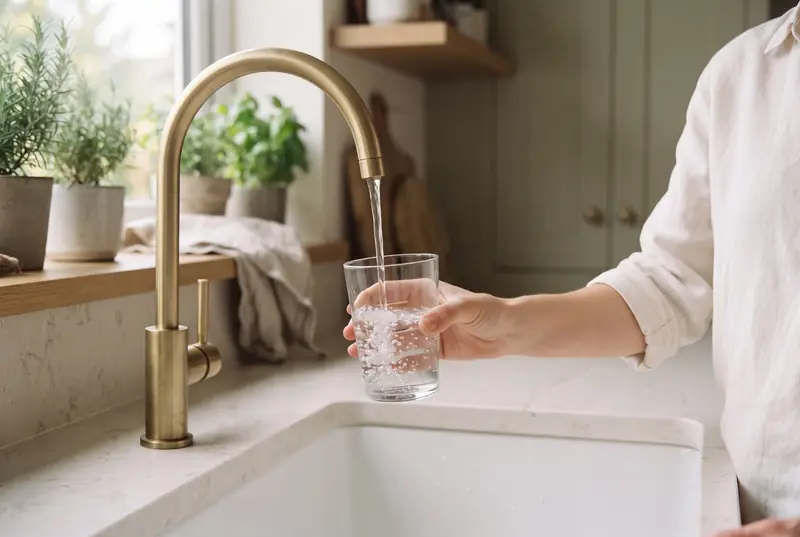
Five things to learn about your own plumbing
None of these takes long, and each one makes a plumbing problem smaller on the day it happens.
Where the main shut-off is
Often in a small ground box near the front of the house, with another valve at the meter by the curb. Find it, and make sure it turns, before you need it.
How old the water heater is
The year it was made is printed on the rating plate or coded into the serial number. Past ten years, begin planning rather than waiting.
What your water pressure is
A screw-on gauge for an outdoor faucet shows it at once. Between 50 and 70 psi is comfortable; above 80 needs correcting.
What the pipes are made of
Look where the lines meet the water heater or enter a sink cabinet. Copper, PEX, gray polybutylene and galvanized steel each age differently.
Where the cleanout is
A capped pipe in the ground near the foundation gives direct access to the main drain. Knowing where it is saves time when a drain backs up.
Service area
Where we work
Our work takes us to homes all over Dallas–Fort Worth. The cities north and northwest of Dallas each have a page of their own below, describing how the homes there were built and what their plumbing is prone to.
Questions
Plain answers to common questions
Do you come to my part of Dallas–Fort Worth?
We serve homes across Dallas–Fort Worth. This site has detailed pages for Lewisville, Flower Mound, Denton, Carrollton, Coppell, Grapevine, Farmers Branch and The Colony, with notes on the housing and plumbing typical of each.
How does the pricing work?
Once the plumber has found the cause, you are told what failed, why, and what it will cost to put right. All of that comes ahead of the repair itself, which goes ahead only on your word.
Do you repair things, or mostly replace them?
We repair whatever can be repaired soundly. Many faucets, toilets, valves and water heaters need only a part. When a part or an appliance is simply worn out we say so, explain why replacing it is the better use of your money, and leave the choice with you.
There is water where it should not be. What do I do first?
Stop the water. Use the small valve under the sink or behind the toilet if the leak is at a fixture; otherwise close the main shut-off for the house. Open a faucet on the lowest floor to relieve the pressure, move belongings clear, and take a few photographs before drying anything.
How do I find the shut-off for the whole house?
In many North Texas homes it is in a small ground box near the front of the house, often in a flower bed, with a second valve at the meter by the curb. In some homes the valve is indoors, either on the wall of the garage or tucked into a utility closet, and older homes may have only the one at the meter, which takes a meter key to turn. It is worth finding, and trying, before you need it.
Is the water here hard enough to matter?
Yes. North Texas water is hard enough to leave scale on fixtures and sediment in water heaters, and that shortens the life of both. Flushing the water heater once a year helps. A softener deals with the cause, and a simple hardness test shows whether one is worth having in your home.
The rule we work by
Measure twice. Tighten once.
A repair that has to be done again was never finished. We would rather take the extra care the first time.
See the servicesNearby plumbers
- Flush Hour Plumbing of CarrolltonPlumber in Carrollton, TX
- Rapid Response Plumber of GarlandPlumber in Garland, TX
- Wylie Plumbing Co.Plumber in Wylie, TX
- Lone Star PlumberPlumber in DFW
- Longhorn PlumberPlumber in DFW
- Texas Tough PlumberPlumber in DFW
- The Cowboy PlumberPlumber in DFW